Monday, March 17, 2014

March of the Ponies: Review of the Previous Works of Lauren Faust

[NOTE: Links to March of the Ponies stories will go here: Part 1 - A look at previous MLP shows, Part 3 - MLP Comics (Micro-series of Twilight, Rainbow Dash, Rarity, Fluttershy, Pinkie Pie, Applejack, CMCs/Celestia, Spike/Luna; Nightmare Rarity arc (main series)), Part 4 - Equestria Girls review, Part 5 - Fan-made episodes (Dusk's Dawn, Double Rainboom, Snowdrop), Part 6 - Fan works (Music, Doctor Whooves, Parody/Abridged Series, Fanfictions), Part 7 - Season Reviews: Season 1, Season 2, Season 3, Magical Mystery Cure, Season 4 (to date)]

The ponies march on.

Welcome back! Before I get into the realm of the MLP Universe, I want to touch on the person responsible for making a Pony show that isn't just a marketing scheme: Lauren Faust.

Those unfamiliar with her work will know her from the credit at the end of the theme song that says, "Developed for Television by..." Those who are familiar with her work will know her from a large portion of Cartoon Network in the early 2000s.

Animator

But before working with them, she was an animator for a series of films. Her first notable work was "Cats Don't Dance" in 1997. This was a Warner Bros. Animation movie and was one of the first things to come out of the Turner-Time
Screw. This. Merger.
Warner merger that killed World Championship Wrestling. (I know, not the time or place, but I was a WCW fan and this merger was no good for anybody.)

The movie moved out of Turner's production studio during post-production and received very little focus. That said, I do know quite a few people who have seen the movie, as have I.

This movie is basically a story about a cat named Danny trying to get a larger role in film and theater. I remember the story being nice enough, though nothing I wanted to see again, but I'm really just noting Faust's work here.

She was one of the animators, and though I can't really distinguish anyone's work (nor should I be able to), the actual imagery of this movie was good. There was color and I don't remember anything particularly jarring.

I could say the same about her next animation job, Quest for Camelot, which has gorgeous imagery mixed with plotting so bafflingly bad that you'll wonder how it was allowed to exist.

I won't go deep into it, as the Nostalgia Critic has already beaten me to it, but needless to say, don't seek this out if you like movies that explain why things are happening or have music that's actually thought out.

Her final notable film work was as an animator in The Iron Giant, which is probably the first sign that she's someone legit. This movie is one of the gems of 90s animation, so if you're going to check out anything Faust worked on as an animator, this one is your best bet.

Writer/Director/Producer

Faust is far more notable on the conceptual side of the production process, as evidenced by the show's she worked on. After getting hired with Cartoon Network, she did work on an episode of 'Code Name: Kids Next Door.'
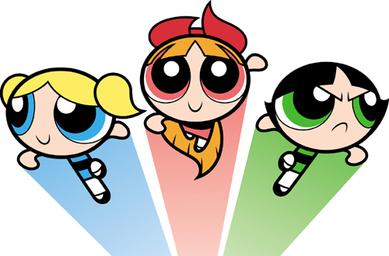
I won't discuss that show or the episode here because she only worked the one and it was only animating walk cycles. Where I will start is her work with the critically acclaimed "Powerpuff Girls" series.

The show, which is easily the strongest of the works Craig McCracken and Genndy Tartakovsky did together, starred three child superheroines fighting crime and trying to learn about the world while having the maturity of a kindergartener.

As you can imagine, there are a lot of comedic possibilities that come from this, and the show balanced action with comedy really well. And the fact that the show starred three female protagonists who were otherwise normal girls was an accomplishment in raising the quality of female-led animation.

So where does Faust come into this? She took over as a writer, director and storyboarder about midway through the series. By this point I had largely moved away from American animation and was in an anime phase, so her work on PPG largely was left unexplored for a while.

That said, over the years I have come across a large portion of these episodes and quite a few were available online. I can say, having seen maybe half of seasons 4-6, that the show's comedy didn't diminish at all with Faust's addition. In fact, I'd say the comedy got better if anything.

The more ominous aspects of the show like Him and the grittier coloring were taken out, which I wasn't  happy with, but it's just as likely that CN requested that change as it being a creative choice.

Even with the more comedic focus, the show still managed to be pretty graphic at times. There may not have been AS MUCH blood and monster dismemberment, but it was still present. There was even an episode revolving around cussing.

He's Santa. CHECK IT!
Honestly, this show is better than I gave it credit for years ago. All the characters stayed in my consciousness and remain memorable years later. If you haven't seen it, check out a few episodes. There's no overarching story, but it's good for a laugh now and again.

If I could give recommendations, check out the series finale, the Faust-dominated Christmas special, the cussing episode and at least one each of the main villains: Mojo Jojo, Him, Fuzzy and Princess Morbucks.

The last pre-FIM show Faust worked on was Foster's Home for Imaginary Friends. I'm not going to lie, when I first saw this thing on TV, I cringed.

It looked like nonsensical insanity and I was moving away from shows that didn't have a semblance of a story. However, it was a Craig McCracken show, and given how terrible CN was getting, I decided to give a Golden Age creator his fair shake. I'm glad I did.

This show was the first one McCracken and Faust worked on as a married couple, and they created a very sharply written comedy that focused primarily on the characters and making them seem real, which really is the point of an imaginary friend, if you think about it.
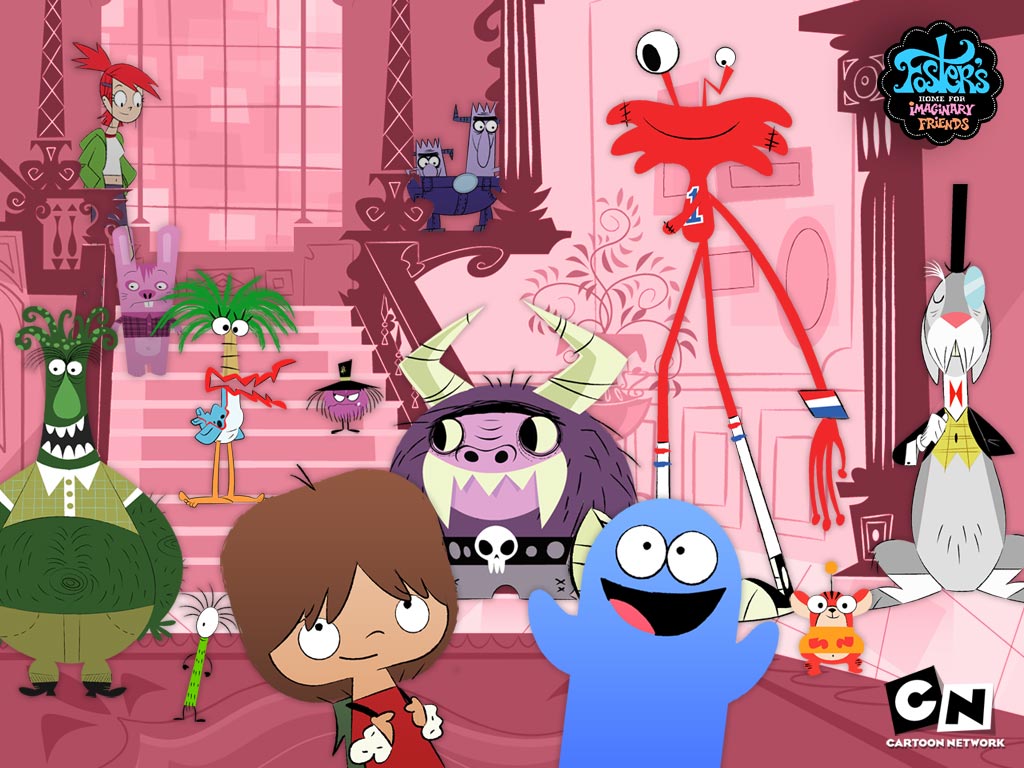
Most people remember Bloo, as he was on all the merchandise and looked like a Halloween ghost colored in, but so much of the cast was memorable. Frankie, Mac, Cheese, Goo, Herriman, Madame Foster, Eduardo, Wilt, Coco - I literally just ran names off the top of my head that I could recall on the show.

Each had their own well-defined personality and once again none of it was defined by gender, which was still a problem in a lot of live-action shows I was watching at the time. By focusing on internal personalities, it gave the viewer a reason to invest in all the characters.

Heck, if you don't count the three-part premiere, there were only ever two multi-part specials, and neither focused on the supposed 'main' characters of Mac and Bloo. The first, 'Good Wilt Hunting,' tried to give a real backstory to Wilt and give closure to his sad past. There were plenty of laughs, but the focus was ultimately on helping Wilt feel secure in his role at Foster's. In my opinion, these are the two best episodes of the series.

Ranking up there as well, though, is the second special: a three-parter called 'Destination: Imagination.' This one is very much Frankie focused, though the ensemble cast gets plenty of time themselves. It's a story about Frankie's frustration with Mr. Herriman and her role in the house, and the imaginary friend that drives the plot with her has a very unique gimmick: He's a box that can create worlds inside himself for people - an imaginary friend who is a portal for imagination.

This was near the end of the series, and did a nice job of drawing the Frankie-Herriman dynamic to a state of closure.

There aren't a lot of episodes that are must-see, but I'd recommend the three-episode premiere, both of the later specials, and the last four or so episodes of the series. Oh, and at least one of Cheese's early appearances.

After completing works on these shows, Faust tried to pitch her own shows. When she came to the Hub to make a pitch for the fledgling network, they gave her a Generation 3 MLP movie and told her to find ways to "fix it." What she created was a fusion of MLP and her previous works (especially PPG) that used friendship as the most powerful force of order in the universe.

The rest is history, which I will start to look at next time.

Follow me on Twitter and Facebook.

Thursday, March 13, 2014

Comic Book Reviews: Batman #29, Nightwing #29 and Blue Beetle #23

In the audio, Blue Beetle moves into his final arc from his 1980s solo series, and you can get my thoughts there exclusively.

Saw this online and thought, 'I have to use this.'
Follow the link at the end to see this guy's blog.


But anyway, let's talk about the final Kyle Higgins Nightwing issue. It's a captivating and legitimate way to end the series.

Yeah, I know. I have to read next month's Issue #30 and get effectively the epilogue on Dick Grayson's life, but this is the end of the story this title tried to tell, and except for the fact that they left a major subplot out of the story (the cop with the costume), they did a nice job summarizing Dick's life and concluding the most recent arc.

I thought the art was solid, though it's definitely hit higher notes, and the plotting was some of the best I've seen from a title that has been dragged through countless editorial mandates and forced to end. Honestly, Blue Beetle could have taken a lesson from this.

I gave this issue an overall score of 8/10.

And, of course, let's talk about Batman: Zero Year. I think this is probably the one of Scott Snyder's three best issues in this arc. Issue #29 was a great story that concluded Dr. Death's story, showcased Jim Gordon's past biting him in the ass, and kicked off the final, three-issue Riddler arc.

Every character was on point and played their part well. My only complaint with character is that Dr. Death did not need to monologue. That just felt out of place.

But otherwise, the action was good and the interactions between Bruce and Alfred via communicator was pretty hilarious.

I also love how Jim Gordon is being given such time to develop. This was a similar compliment I could give with the Black Mirror, so yeah, kudos to Snyder.

As for the art, Greg Capullo and his team used the extra month to hit bulls-eyes. I loved the art and color themes in this issue and I loved the call-back to old Frank Miller art styles.

Overall, this is one of the best issues this month. I'm giving it a 9/10.

And as promised, check out the blog I talked about in the first caption here. It's title is called the G33K blog and his reviews of this series were really solid. Give them a look.

Tuesday, March 11, 2014

March of the Ponies: An abridged history of 'My Little Pony'

[NOTE: Links to other March of the Ponies stories will go here as they are published. Part 2 - Review of Lauren Faust's prior works, Part 3 - MLP Comics (Micro-series of Twilight, Rainbow Dash, Rarity, Fluttershy, Pinkie Pie, Applejack, CMCs/Celestia, Spike/Luna; Nightmare Rarity arc (main series)), Part 4 - Equestria Girls review, Part 5 - Fan-made episodes (Dusk's Dawn, Double Rainboom, Snowdrop), Part 6 - Fan works (Music, Doctor Whooves, Parody/Abridged Series, Fanfictions), Part 7 - Season Reviews: Season 1, Season 2, Season 3, Magical Mystery Cure, Season 4 (to date)]

Well, I wish all my fellow Catholics a pleasant Lenten season. I'm already behind on this gimmick, so expect a second Pony article this week.

Anyway, a lot of you are probably curious as to why this blog is suddenly taking an in-depth look at the My Little Pony franchise, specifically this generation's version of the show, "Friendship is Magic."

Yes, this is happening on my blog.
The answer is quite simple: the Internet demands it, and my curiosity is piqued.

I actually watched the original version of this show when it was on the protozoic version of the Disney Channel in the early 90s, mostly because it came on around Care Bears and Gummi Bears. (I was 4. Give it a rest.)

But the thing is, all those programs are a nostalgia trip now. Very few aspects of them are so objectively good that I could go back and re-watch them for anything other than reliving my childhood.

My Little Pony, on the other hand, seems to have rebuilt itself into a multi-platform machine. And its biggest fan base is not the little children who carried it in the old days. Instead, the group that seems to carry its ratings the hardest are men in their late 20s through early 40s - also known as 'Bronies.'

Something about this show is hitting a bulls-eye. I don't buy that a show can have a base that large comprised of just nostalgia trippers or weirdos. This show obviously attracts a true, legitimate, rabid fan base and 'ah gots ta'know!"

As such, prepare to strap in for a string of reviews and glimpses at MLP: FIM during this March of the Ponies.


To give you a feel for how this will work, here's my basic plan:

Week 1 (technically this blog): History of the animated Ponies before FIM
Week 2: A review of some of creator Lauren Faust's earlier works
Week 3: MLP: FIM comics
Week 4: MLP: Equestria Girls review
Week 5: A look at the voice-staff and fan-made episodes (Dusk's Dawn, Double Rainboom and Snowdrop)
Week 6: A look at the most famous fanfiction, "My Little Dashie," the most infamous, "Cupcakes," and other recommended works
Week 7/Holy Week: A general review of the show proper, season by season.
Week 8: Final conclusions and a top 10 list of favorite characters

Anyway, this will be a very brief review of previous variations on the universe and a measure of what their strengths and weaknesses were. Why? Because much like the Teenage Mutant Ninja Turtles, understanding provides context to why things are the way they are now.

The first series ran for 65 episodes (including two standalone specials that were later re-worked as two-part season finales for the series) and a movie. I actually only vaguely remember the show, as its reruns led into the "My Little Pony Tales" show that aired when I was young. However, I remember it slightly and a re-watch of a couple episodes on YouTube did help jog my memory.

What may come across as surprising is that this version of the show was kind of dark. If the show didn't use so much faded, pastel coloring they could have really made this an uncomfortable show for kids. It's definitely gone darker than a lot of Disney's stuff at the time.

The show's ultimate failing is, and I can't believe I'm saying this, there's too much going on too quickly. The show predominantly did multi-part episodes and seemed to operate with vastly different casts leading each time.

Seriously, most fleshed-out entity in the whole show.
There are more than 20 ponies listed on the character list on Wikipedia, and the major characters are considered the humans (and Spike the dragon). That's because they're the only characters who seem to carry over from arc to arc.

Because of this, the pony characters are very one-note and don't have enough depth to carry a show as a major character. And to be blunt, the kids are pretty bland themselves and Spike really is the closest thing to a fleshed out character in the show.

The reason this is a problem is that it's hard to get invested in a grandiose plot if you have no idea who the characters are and what makes them important. It works as a young children's show because it's easy to create the rooting interest: the colorful ones are good and the scary ones are bad. But without characterization, the show loses strength as the viewer gets older.

If you need any reason why the series stopped after two years, that's it. The kids watching were going into school soon, and the show's flaws were about to become exposed.

As for the movie, I actually remember the villains from its Disney airings. The witches, however, I only remember as comic relief. The big threat was the ever-expanding ooze monster known only as... the Smooze.


Yeah, I've already seen some Friendship is Witchcraft as of this blog and I actually laughed at the callback when I figured out the context.

While I don't remember this villain by name, I remember seeing a villain like this as a kid and being intimidated by an unstoppable force that changes your mind. I was actually surprised it was MLP; for some reason, I was sure it was a Care Bears villain, but oh well...

I couldn't find the whole movie but did find parts of it. From what I can tell, it was slightly better executed because they limited the cast and gave characters a little more time to develop. Mind you, it wasn't much better, but if you're looking up original MLP stuff, go with the movie before the series.

If people really want a full review of this movie, they can request it, but I think these thoughts suffice.

The other MLP G1 series was "Tales," which I mentioned I saw running after the original show. (I was a TV junkie as a kid, if you couldn't tell.)

"Tales" was much different from the original series. The ponies walked on two legs and did more human tasks; humans were removed from the series; the major cast was set at 7 ponies; and the subject matter focused less on magic and more on behavior in social situations.

Compliments first: the animation here is better and the characters actually had a little more depth. The characters actually were somewhat memorable, and while I couldn't call the names up in my head, when they were said during a re-watch, the show came back to me a little. Things were done right here.

The problem is that the conflicts were absurdly small-time, way too predictable and the songs they tried to work in were UNBEARABLE.

This show only lasted 26 episodes, but if I had to give a recommendation, this show is more practical for kids and had better characters, so I'd recommend this old-school MLP voyage if you're going with either.


There was no series, really, after these, but that didn't stop early 2000s Hasbro from trying to force feed everyone a bunch of direct-to-video movies. And, oh my, these are boring beyond comprehension.

First off, the animation seems to have somehow regressed since the 1980s and 90s. The ponies look less like ponies and I'm convinced the animators only did like two or three stock drawing for speech because everyone's dialogue motions look the same and their words only barely match the animation.

The actual motion is choppy and the pegasi feel like the early draft of robots used for the Small, Small World ride at Disneyland.

But these movies' biggest failures come in characters and plot, in that neither exist. The ponies somehow have even less developed personalities and, if possible, have negative amounts of charisma. The stories have no real conflict and what little there is gets resolved with barely an acknowledgment that it even existed.

I've heard of something called "Generation 3.5," which is apparently a movie that deviates from the traditional early 2000s design but is more connected to those movies than the current series. The designs somehow got even less sensible and I'm convinced the young versions of the ponies were based on that baby in "Dinosaurs."
You're doing ponies wrong if I'm reminded of this.

I will say this: when I first discovered the Internet's love of FIM, the only name that came to mind was Rainbow Dash. That name was not in the original shows and was exclusive to the 2000s when I knew nothing of the product, so I have no idea how on Earth that name slipped into my subconscious. Kudos to these movies, I guess, for getting that character out there... somehow.

Conclusion: I was actually going to do a show comparison between the old and new shows, but elected against it because it became very clear just watching a few episodes of each that the current series has blown the others away by miles.

Don't get me wrong: While it was a chore to re-watch early pony stuff, there were elements done well and the earlier series especially had moments of decent entertainment. However, at the end of the day, the earlier works were clearly oriented toward kids and kids alone.

Nothing about these shows was bad for children and would have probably been entertaining for people much, much younger than I am. But it seems like the older a viewer is, the harder it would be to enjoy the older versions of MLP. There's very little meat to the characters and the plots are better in concept than in execution.

Additionally, the older shows were definitely more oriented toward females and hoped that cutesy imagery would carry the audience the way action shows like He-Man and Transformers had done for male audiences.

Already I can see that FIM has done far more than its predecessors. It has a plot that not only makes sense in its world, but actually works to give characters something to react to. And the characters are really fleshed out. They have actual thought processes that evolve with the show.

In closing, I think the biggest difference between the MLPs past and the one now is that the older shows were wish fulfillment. The ponies' characters were mostly blank so the kids buying the toys could fill in the blanks themselves. That's great for selling toys, but you don't get viewers by giving a half-finished product.

FIM creator Lauren Faust sought to create characters that people would want to see and a show that would connect viewers to the characters so fans would actually want the individual toys. Effectively, she went the TMNT route more where the old shows went the Captain Planet route.

Speaking of Ms. Faust, I review her older works next time.

Follow me at twitter.com/seantherebel and like my page at www.facebook.com/SeanNetworkBlogs.

Thursday, March 6, 2014

Comic Book Reviews: Action Comics #29, Green Arrow #29 and Blue Beetle #22

The book of the month seems to be constantly be hanging around this set of reviews, and I don't expect this month to be any different.


Book of the Week. Barely.

Jeff Lemire/Andrea Sorrentino's Green Arrow and Greg Pak/Aaron Kuder's Action Comics are making a splash on this blog and as these arcs move closer to their conclusion.

I have quite a few blogs ahead of me this week, so this one will be pretty much entirely audio-based. That said, trust me when I say both are must-buys. The scores are below.

Green Arrow #29 - 9.2/10
Action Comics #29 - 9.5/10


Comic Book Reviews: Detective Comics #29 and Green Hornet #10

March is a BUSY comic month.


As such, these comic reviews this week are going to be largely audio-based, as I have an Avatar TPB review and a March of the Ponies intro to write.

But nonetheless, the John Layman/Jason Fabok-led Detective run reaches its end this week, and Mark Waid's Green Hornet enters its final 3 issues. Check out the reviews in audio, but here are the scores:

Detective Comics #29 - 8/10
Green Hornet #10 - 7.5/10


Tuesday, March 4, 2014

200th Blog Celebration: Who is the 'King of the Indies' in comics?

Well, here we are! It's been 200 blog posts on this main blog page, and so today I'm going to talk about something everyone wants to hear about: Independent comic publishers!

Yeah, yeah, it seems like an odd choice, but honestly, I spend so much time talking DC Comics that I feel like it's necessary sometimes to draw attention to some of the other companies.

Publishers. Publishers everywhere.
Plenty of reviewers draw wide attention to the Big Two publishers of DC and Marvel, who have jockeyed for the top of the sales charts for decades (currently Marvel wins a lot due to the fact that they publish an absurd amount of bimonthly books), but today I ask the question: Who is the King of the Indies?

I like to think of comic history in terms of 90s wrestling. DC is WWE: the oldest and in possession of the most legendary names. Marvel is WCW: run by a media juggernaut and always trying to be the edgy new product. The question is, who is ECW: the smaller group who takes an alternate route to success but still has national value?

For a long time, Archie was considered an equal to DC and Marvel, providing a family-friendly, non-superhero option to kids reading. But eventually, the 1980s came around. When the general public realized comics had taken a darker, deeper turn, older audiences became as much of a driving force as kids, and Archie's success has been hindered since.

Don't get me wrong: They still have a decent supply of readers, long-standing titles that are as old or older than 99 percent of the books out there, and a spot in supermarket racks that other titles can't claim. But even with Sonic the Hedgehog and Mega Man in their arsenal, they are no longer in the picture in terms of sales dominance.

I've reviewed Green Hornet and Red Sonja on this blog from Dynamite Comics, and I've expressed respect for their titles "The Shadow" and "Lady Rawhide." But Dynamite has the issue that their major characters fell out of fashion with television. It's a pulp company in a time when pulp just can't carry the market. Boom! Studios has a similar issue, though having Adventure Time under contract certainly helps them.

Honestly, when judging the companies who jockey for the No. 3 spot, it comes down to the three who combine to make up between 18-23 percent of the industry at any given time: Image Comics, Dark Horse Comics and IDW Comics.

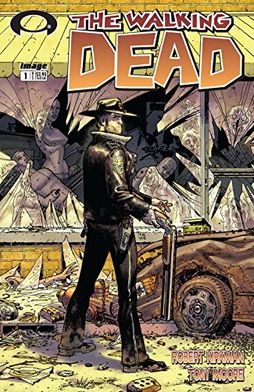
As of today, Image is the one with the sales figures that put them in third, but a lot of that can be attributed to one title: The Walking Dead. Of all the indie titles right now, that's the one that's garnered the most attention thanks to a highly successful TV adaptation of the title.

Because of the TV show sustaining much of Image's success, I can't say they've become a permanent No. 3. Saga is really the only other title they have near the top of the sales charts. Though right now Dark Horse and IDW don't seem to crack very high either.

So rather than give a definitive selection, I'm going to leave you some recommendations and notable titles for each so that you too can get involved with the non-Big Two comics scene.

Image

Notable titles: Walking Dead (duh!), Saga, Deadly Class, East of West, Sex Criminals, Chew and Spawn

Thoughts: Image is a true indie through and through. Their titles are never established beforehand and many are creator-owned. Titles like John Layman's Chew and Brain K. Vaughan's Saga got famous for being good, not for having an iconic figure in the title. Overall, these books are not a style of title I enjoy reading consistently, so they're not for me. But they are clearly for quite a few. If a jack-of-all-trades company is up your alley, this is a company to look at.

Dark Horse

Notable titles: Tank Girl, The Mask, Avatar: The Last Airbender, Star Wars (through 2014), R.I.P.D., Sin City, Serenity, Conan the Barbarian

Thoughts: Dark Horse strikes me as an indie in need of a major title to spike and soon. With Star Wars, their long-time money maker, on the way out in favor of Disney's Marvel, the company has very few monthly titles that get very high. Many of their titles like Tank Girl and The Mask have long since run their course of popularity, and Avatar, while I read it regularly, is published infrequently. As such, it's hard to find anything to recommend with any kind of regularity. I guess if you like Serenity or Conan, you've got something here, but this company is definitely in transition.

IDW

Notable titles: Teenage Mutant Ninja Turtles (both TV and its own continuity), X-Files, My Little Pony: Friendship is Magic, Samurai Jack, Powerpuff Girls, Dexter's Laboratory, Star Trek, Black Dynamite, Magic the Gathering Theros, Transformers

Thoughts: If the list of titles is any indication, you know that IDW makes its living off of the past successes of franchises. The reason I listed them all is to give you a feeling as to how much they've bought up. Quite honestly, I love their titles more than any other indie. Samurai Jack, TMNT and PPG are all solid additions to the universes of those franchises, and I've heard good things about Start Trek and MLP. The main problem is that very few of their titles are creator run and very few can cross over with each other. It's basically just a niche company who attracts the fans of the various franchises they swallow. If you like these programs, buy the comics; they do good work. Otherwise... well, still buy the comics and expand your base. These are objectively very good titles. It just so happens they're not original thoughts.

You know what, I actually do need to give a verdict...

We should just let this title be
King of the Indies.
 
Verdict: While I believe IDW produces the best quality books, Image Comics is probably the true King of the Indies for all intents and purposes. Just looking at the library of each, it's clear Image has carved out an area in original content the way DC and Marvel have. Whether I like that content is another matter entirely, but nonetheless, they've found a way to draw in readers who may not be into strictly superhero fare.

Dark Horse was the king and may be there again one day. Right now, though, they've become very Star Wars heavy and I need to see what they do post-Star Wars before making a judgment. They've got some decent stuff in place, but until it pans out, they have a lot of work to do.

IDW is basically the anti-Image in that virtually all their titles are ripped from established franchises. As good as IDW is, Image can continue to make new ideas happen. IDW is forever tied to franchises that could easily be consumed by other companies. I really hope IDW finds real success with this route and eventually does become the top of the indie heap, but more original content is necessary, as you can't just get by on TMNT, Star Trek and MLP: FIM.

Speaking of MLP: FIM, Lent is beginning and so this March is devoted to reflection on a certain topic: Bronies. And so for the next few weeks, I'll be infrequently be publishing articles as I explore the phenomenon that is My Little Pony and why so many adults have become fans of it.

Will I be a fan by the end of it? You will only know by following March of the Ponies.

Saturday, March 1, 2014

History in the making today: Wichita State Shockers

Yeah, as I said, I needed a blog post to fill a slot so that my 200th blog post didn't have to be a comic or "Arrow" review, so I'm going to talk really fast about something I love: college basketball.

More specifically, I'm talking about a team from the semi-major Missouri Valley conference who has been dominating the competition this year. That team, for those not paying attention, is the Wichita State Shockers.

The Shocker name is pretty fitting for most fans, as most seem to believe that this team is some kind of fluke. There is still debate over whether they should receive a No. 1 seed - not THE No. 1 seed, just one of the four - in the NCAA tournament.

That's the most arrogant, elitist load I've heard.

Today, the Shockers play Missouri State in the regular season finale. If they win, they will end the regular season at 31-0, the first to finish a regular season undefeated since St. Joseph's in 2004.

They're also the first team to win the first 30 regular season games since UNLV in 1991.

This is a team that Kansas actively avoids playing, and Bill Self has even said that the Shockers deserve the No. 1 seeding.

Regardless of schedule strength, the fact is that in a Division with more than 300 teams, they're the only one to line up all their opponents and knock them all down. Yes, the MVC is down this year, but Indiana State and Missouri State aren't slouches and you can bet that Wichita State has received everyone's best shot.

I say let them prove it in the tournament, but until then, you have to give them the benefit of the doubt and peg them as the top seed.

Assuming, of course, that they win today.